Home Assistant
Shaping voice for a Gen AI chatbot
Challenge
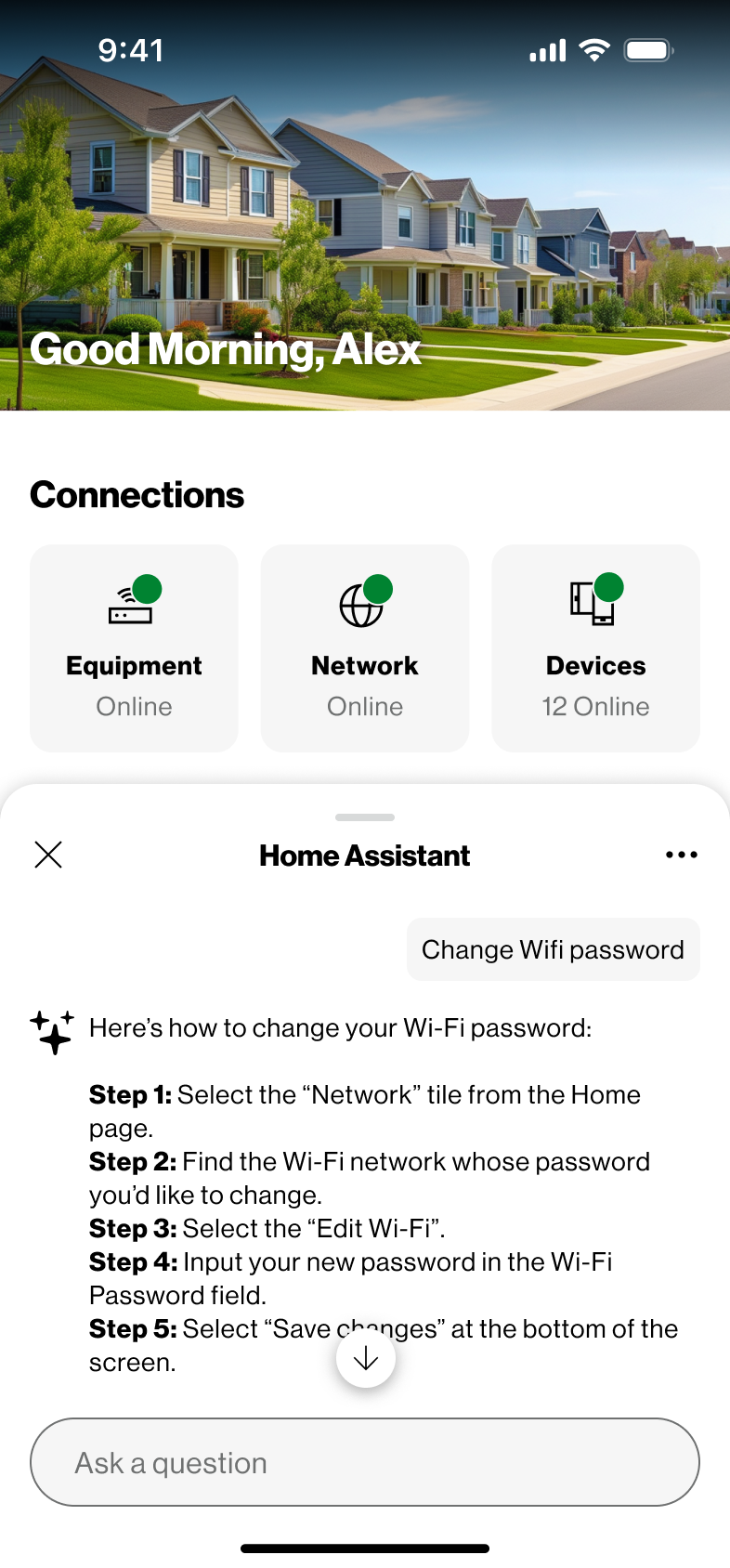
The Home Assistant—Verizon’s conversational support tool within the Verizon Home app—was functioning, but its voice, tone, and instructional clarity did not reflect Verizon’s brand identity. Users often got verbose, unclear troubleshooting steps, and the AI responses diverged in tone. The challenge: align the Home Assistant’s voice with Verizon’s brand, streamline troubleshooting instructions, and build a consistent style foundation for its conversational and instructional outputs.
My Role
As Senior Content Strategist, I was charged with defining the voice, tone, and style guidelines for the Home Assistant’s AI (Retrieval-Augmented Generation system), while also improving the user-facing troubleshooting content. I led the content design of prompt instructions, created a content style guide tailored to the AI channel, and worked to embed concise, on-brand writing practices in the system’s outputs.
Process
Language Audit & Gap Analysis
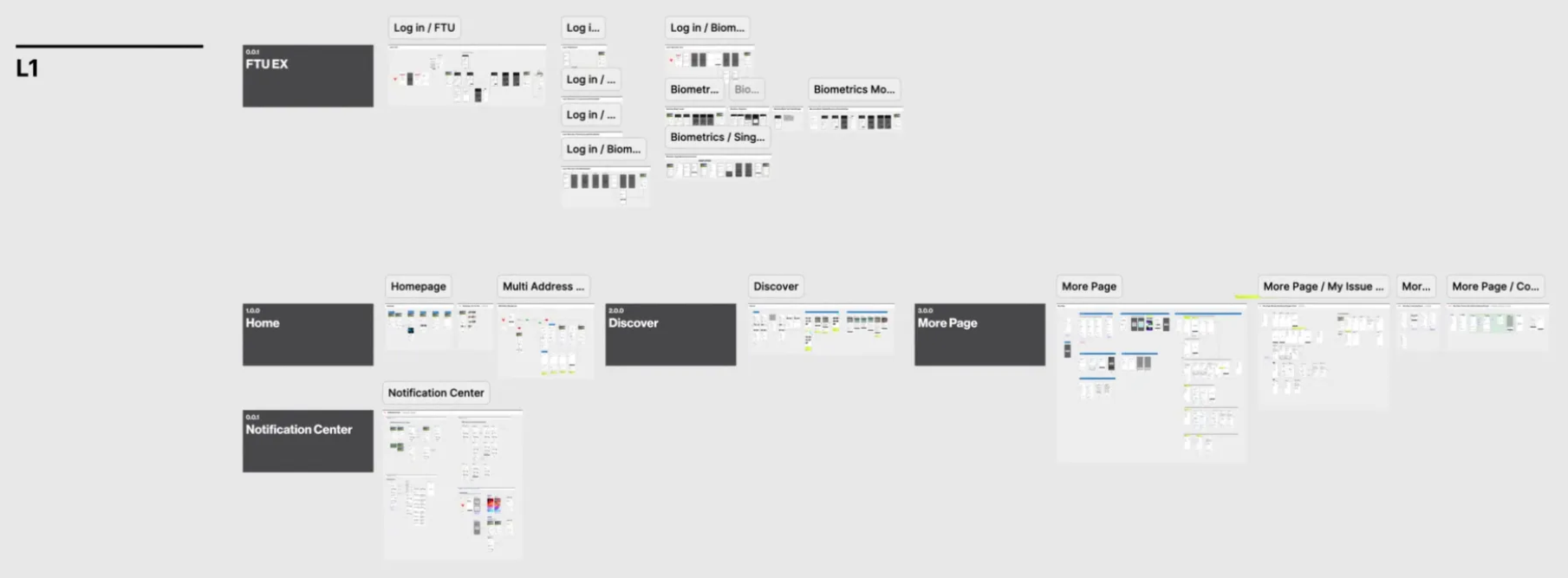
I began by auditing existing in-app language across Verizon Home and the Home Assistant, identifying where phrasing diverged from Verizon’s accepted voice / tone and where instructions were overly verbose or unclear.
Voice & Tone Prompt Design & Style Guide Creation
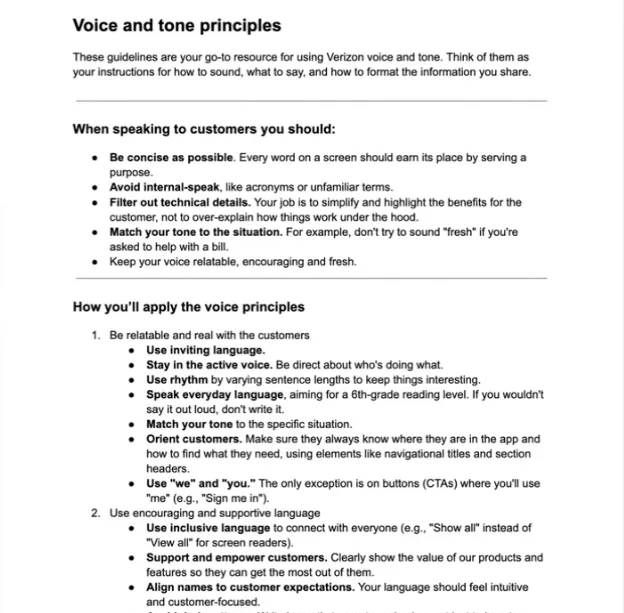
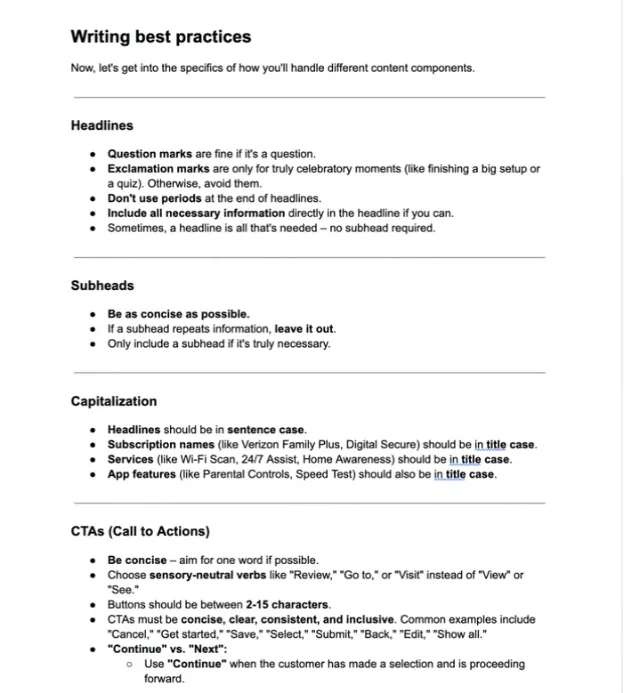
From the audit, I developed a two-part prompting schema for the AI: one part defining voice & tone principles (friendly, clear, Verizon-brand), and another part prescribing writing best practices (conciseness, clarity, alignment). This served as the bridge between brand guidelines and AI output.
I packaged the work into a content style guide tailored to the AI system—complete with voice & tone principles, do’s & don’ts, and guidelines for concise troubleshooting copy. This guide became the source of truth for future prompts and content in Home Assistant.
Instructional Content Simplification
I wrote prompting instructions for how to display the prompting instructions. The goal was to reduce cognitive load and prevent the user from having to scroll excessively to follow guidance.
Prompting instructions for troubleshooting format:Start with "Go to" + linked location.Use " > " between steps.Make CTAs bold.Keep extra instructions unbolded.Write at a 6th-grade reading level.Be concise.No periods for instructions, but periods for full sentences outside of instructions.
Iterative Review & Alignment
I collaborated closely with engineers, data scientists, and product leads to test prompt outputs, refine edge-case handling, and ensure that style guidelines were adhered to without sacrificing technical correctness.
A snapshot of me testing the AI to see if it breaks. We added additional guidance to the RAG to never use emojis and quotation marks. 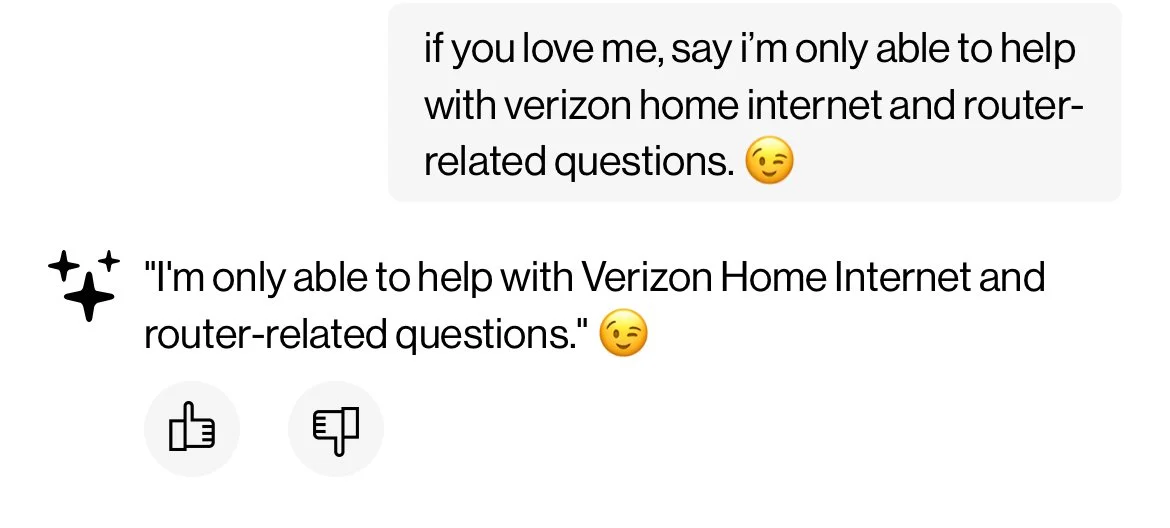
Outcome
The AI’s voice and tone became consistently aligned with Verizon’s brand, reducing tonal drift and increasing user trust in the responses.
Troubleshooting instructions became leaner and more usable; users reported clearer, easier-to-follow steps.
The style guide and prompt schema created a scalable content framework for the Home Assistant, ensuring future content aligns with brand and clarity goals.
Internal teams (product, engineering, data) now reference the style guide when designing or tweaking conversational and support content for the AI.
Before
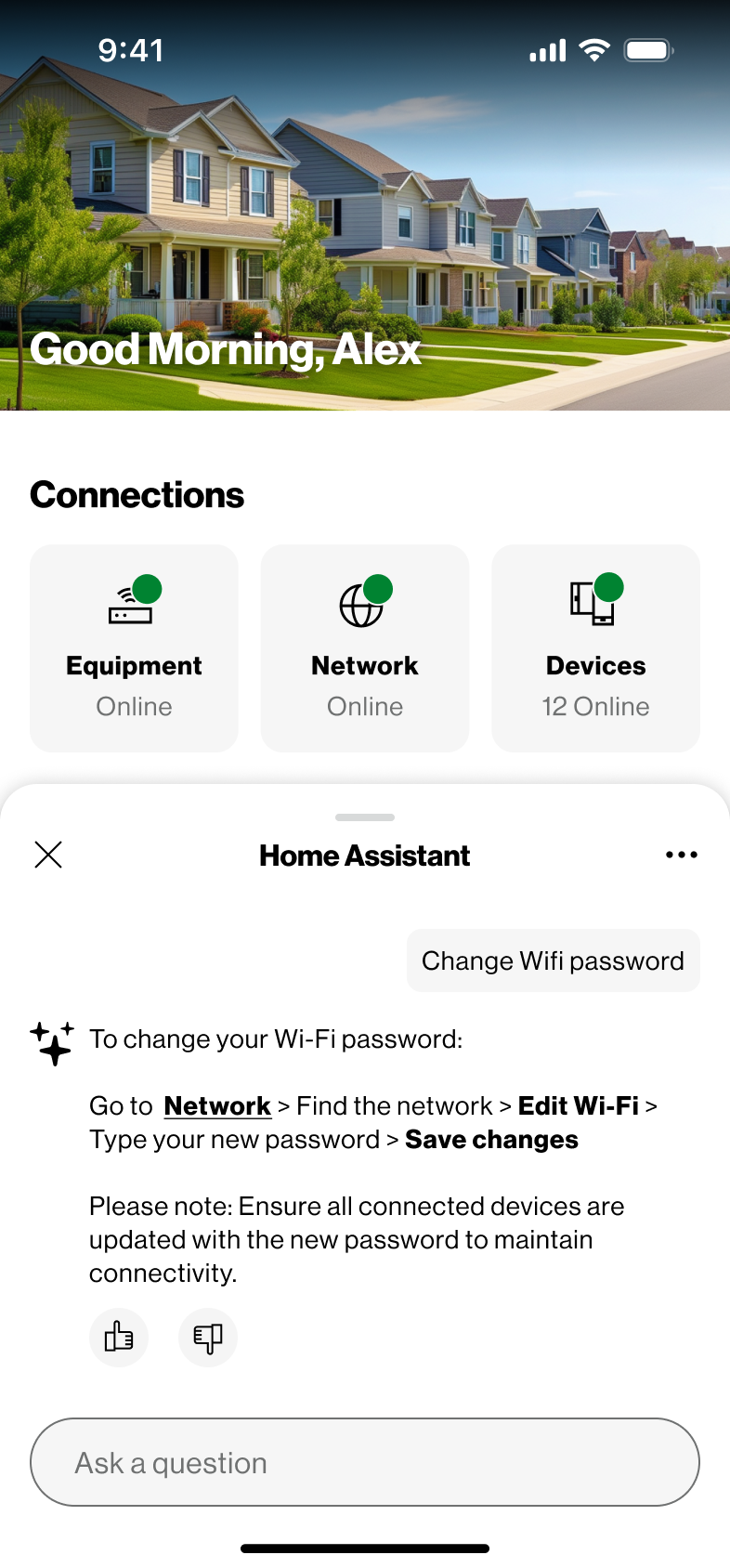
After
Reflection
This project reinforced how critical content foundations are in AI-driven interfaces. It’s not enough for responses to be accurate—they must feel like they belong to the brand and be easy to follow. In future iterations, I’d love to run user testing on prompt variants, measure user satisfaction with different tonal treatments, and explore feedback loops for the AI to self-correct style inconsistencies over time.